
All explainers · Agent-based simulation, explained
One traveller, two modelling views
Animation paused (reduced motion). Press play to watch.
In one sentence
Not a different answer to the strategic question — a visible journey behind the total.
Why it matters
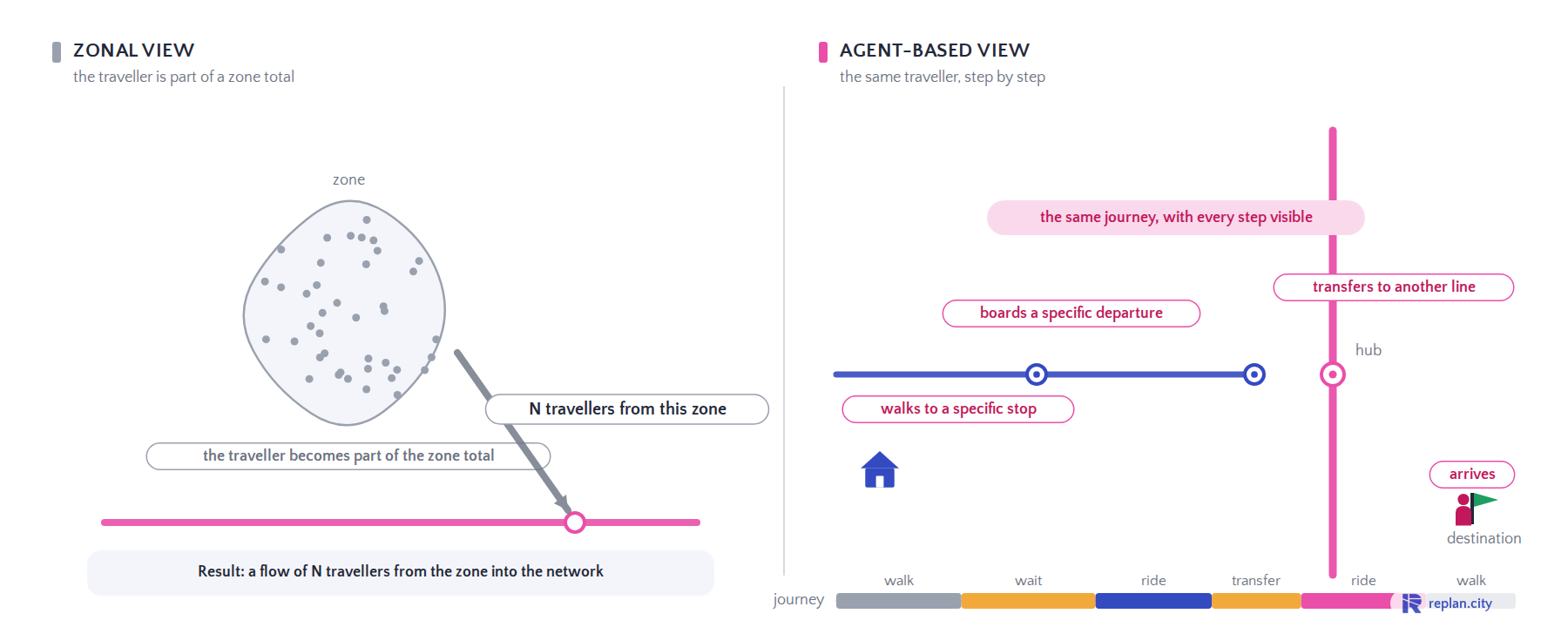
In the zonal view one traveller becomes part of a zone total: a flow of N travellers into the network. In the agent-based view the same person walks to a specific stop, waits four minutes, boards a specific departure, transfers and arrives — and the timeline shows where the journey time goes.
Agent-based simulation is usually explained with equations or with a screenshot of a running model. Neither shows why a planner should care. These explainers show the mechanism itself — one person, one day, one score — so that the results on a dashboard stop being a black box.
Sources
- Schematic illustration; values are illustrative
What you see
- 00.0Zonal view: part of a total
- 05.0Agent view: walks to a stop
- 07.4Waits, boards
- 10.0Transfers, arrives
- 14.0Every step visible
Use this explainer
MP4 (1800×720) · GIF (1200 px) · Poster (PNG)

Embed: <iframe src="https://www.replan.city/explains/embed/one-traveller-two-views.html?lang=en" width="900" height="360" style="border:0;max-width:100%;aspect-ratio:5/2" loading="lazy" title="One traveller, two modelling views"></iframe>
Paste into any page; the explainer plays as live SVG (no video file).
Licence: CC BY 4.0 — reuse freely with the line “Replan GmbH · replan.city/explains”. The Replan mark in the corner stays.
See it on your own network
Book a demoRelated explainers
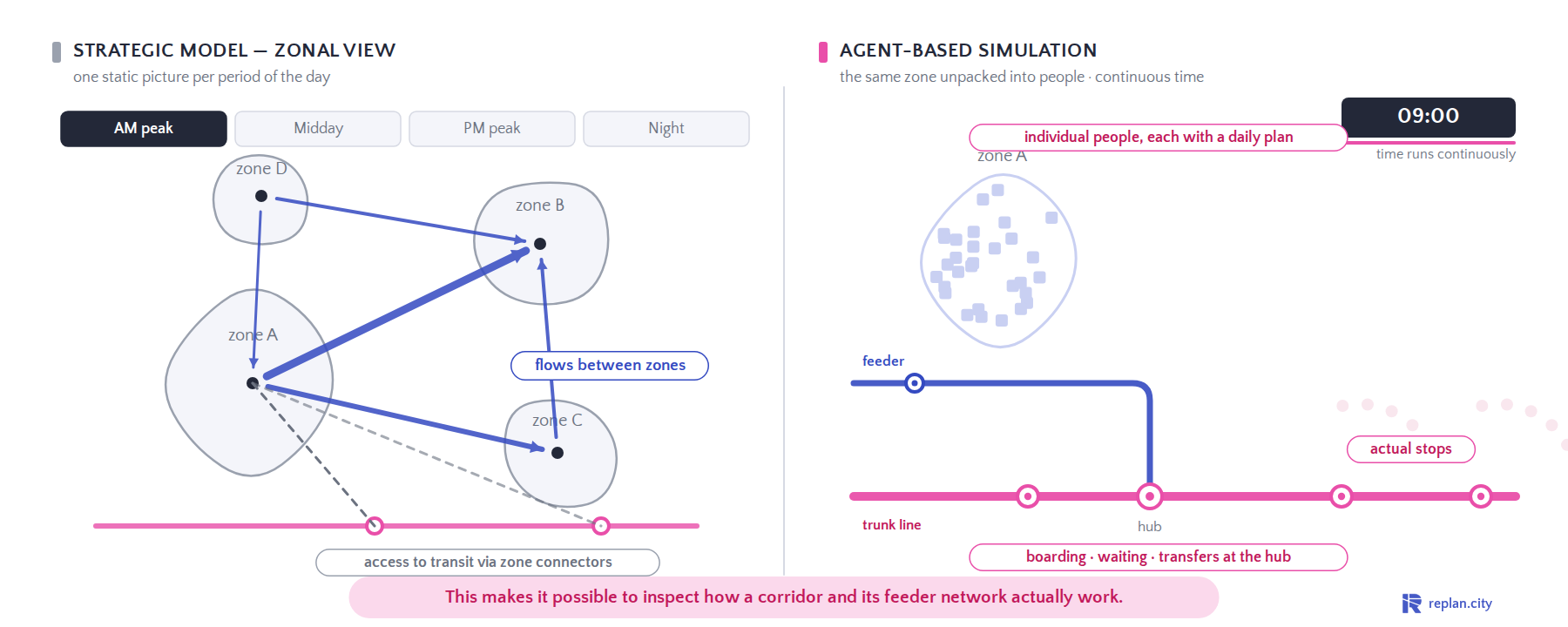
From zonal flows to individual journeys
This makes it possible to inspect how a corridor and its feeder network actually work.
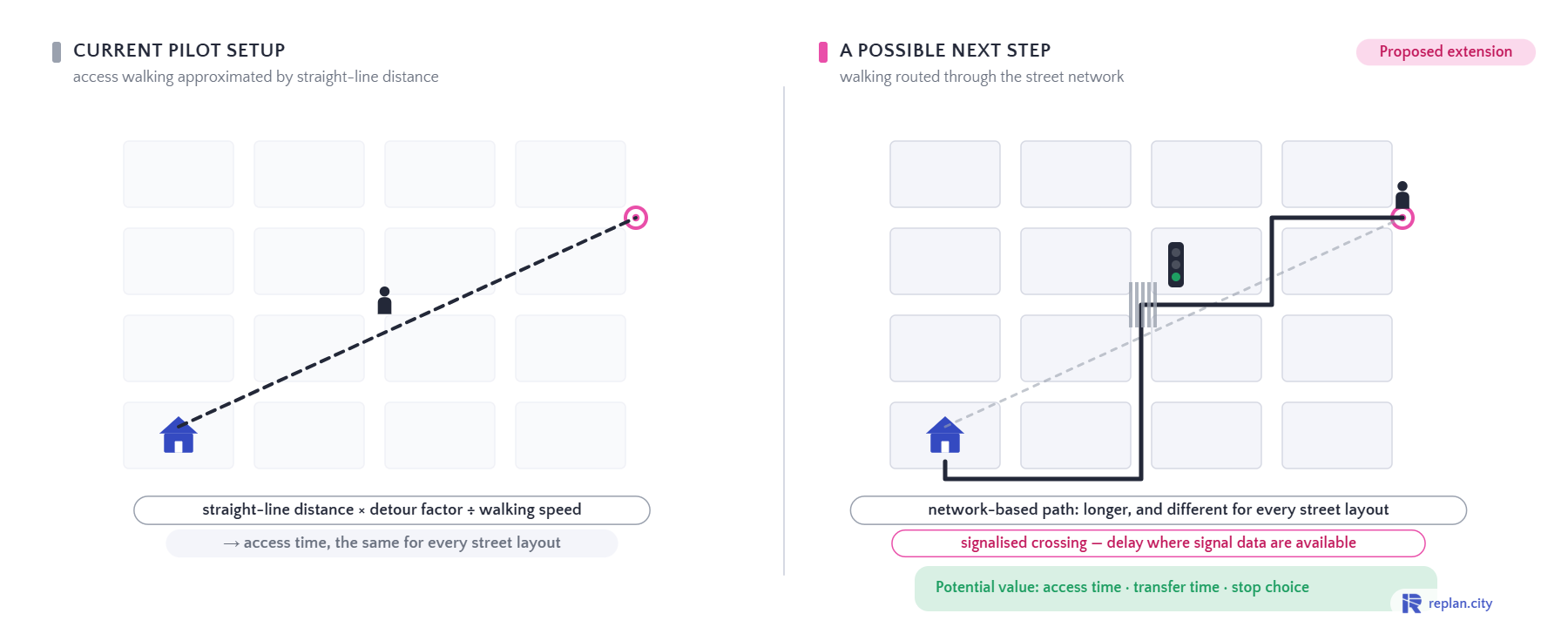
From straight-line walking to network-based walking
Potential value: access time, transfer time, stop choice.
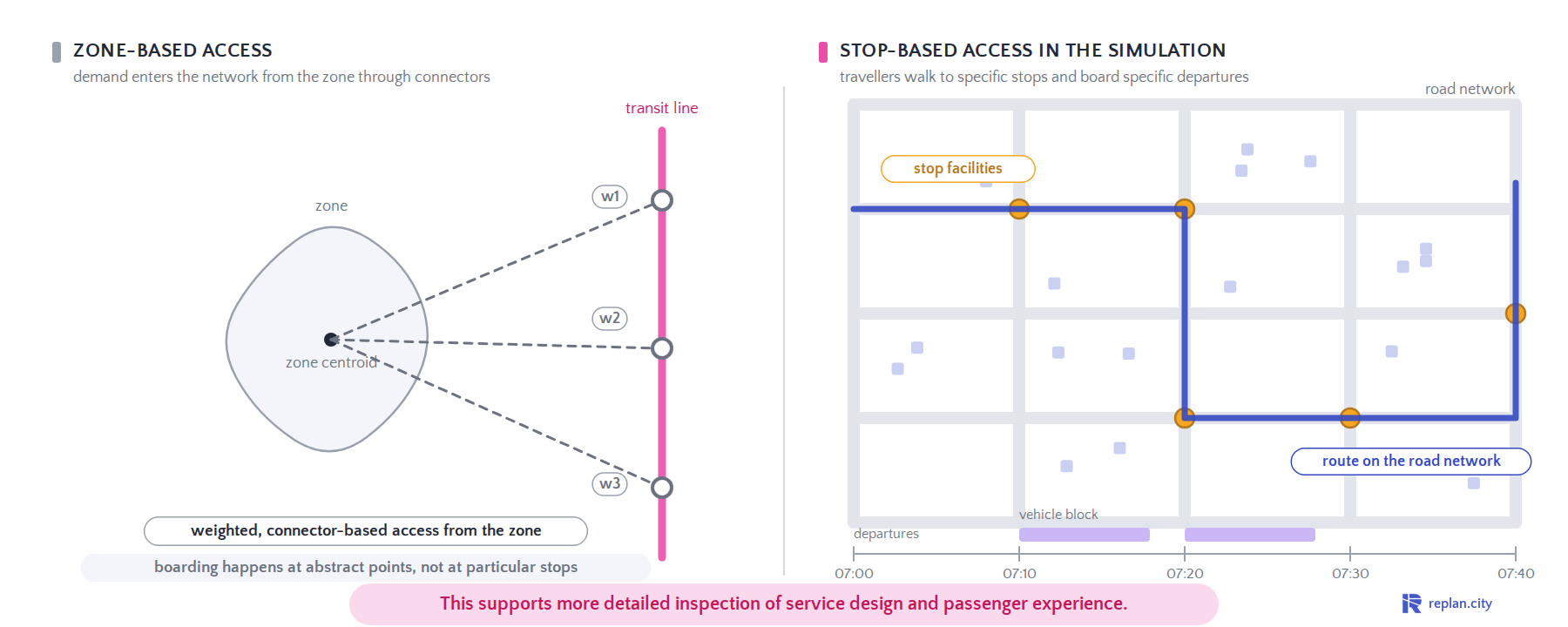
Two different ways to connect travellers to transit
This supports more detailed inspection of service design and passenger experience.